What are the titanium properties affecting machinability?
Titanium is well-known for its unusual characteristics, which have a considerable impact on machinability. Understanding these features is critical to effective machining operations. Here is an overview of titanium machining, covering problems and recommended practices.
Low Thermal Conductivity
Titanium has a very low thermal conductivity, which means that heat created during cutting does not dissipate efficiently. Instead, it concentrates near the cutting edge, resulting in machining temperatures of more over 2,000°F (1,093°C).This heat can accelerate tool wear and possibly distort the cutting edge.
High Chemical Reactivity
Titanium is chemically reactive, especially at high temperatures, which can cause galling and welding between the material and the cutting tool. This contact can cause premature tool failure and chipping.
High Hardness
Many titanium alloys, like Ti-6Al-4V, have high hardness levels (up to 40 HRC), making them more difficult to process than pure titanium grades.Hardness increases with work hardening during machining, complicating the cutting process.
Low Modulus of Elasticity
Titanium’s lower modulus of elasticity contributes to its flexibility, or “springiness,” which causes it to deflect under cutting pressures. If sufficient support and rigidity are not provided, this behavior might cause vibrations and mistakes in machining.
What are the different methods of cutting titanium?
Cutting titanium, which is known for its high strength-to-weight ratio and corrosion resistance, poses distinct challenges due to its hardness and low thermal conductivity. Choosing the right cutting procedure is critical for achieving precision and maintaining the material’s integrity. Listed below are various successful titanium cutting processes.
Manual Cutting
Hacksaws, shears, and other hand-held tools can be useful for small jobs. Because titanium is so hard, this method isn’t as good for bigger jobs because it takes a lot of work and time. When cutting by hand, using tools with carbide tips can make the job go faster.
Saw Cutting
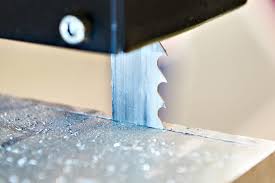
Using band saws with carbide-tipped blades enables for accurate cuts. To avoid overheating and tool wear, keep the cutting speed moderate and use adequate coolants.
Laser Cutting
Laser cutting provides excellent accuracy and is perfect for complicated forms. It creates few heat-affected zones while keeping the material’s characteristics. However, it may not be appropriate for cutting larger titanium pieces.
Plasma Cutting
This process melts and removes material by using a high-velocity jet of ionized plasma. It is useful for cutting thicker titanium sheets, but may produce a larger heat-affected zone than laser cutting.
Waterjet Cutting
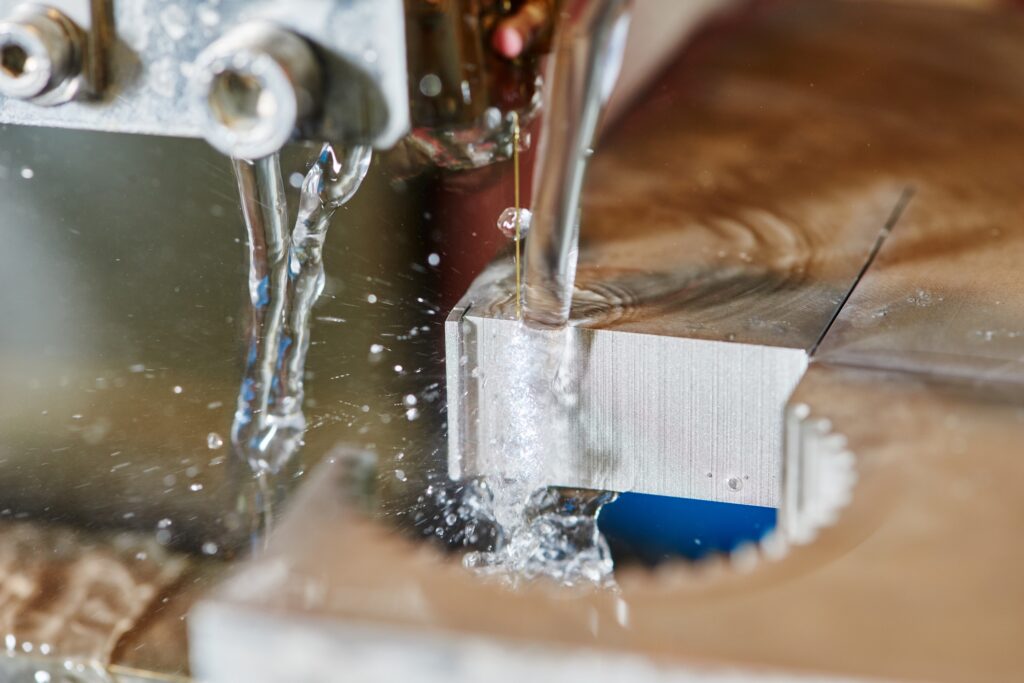
Waterjet cutting, which uses a high-pressure stream of water combined with abrasive particles, is a cold procedure that removes heat-affected zones. It is suited for cutting big titanium parts while preserving the material’s structural integrity.
Milling and Turning
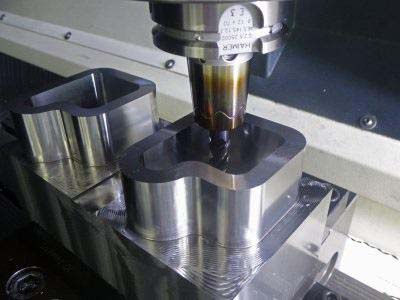
Titanium may be cut using CNC milling and turning equipment, which are particularly useful for complicated forms. Using carbide tools with suitable coatings, such as titanium aluminum nitride (TiAlN), may improve tool life and performance. To reduce heat accumulation, keep cutting speeds low and feed rates high.
Cold Sawing
Cold saws cut metal using a circular saw blade, transferring the heat generated by the cut to the chips produced by the saw blade, keeping both the blade and the material being cut cold. This approach is good for cutting titanium while reducing heat-induced deformation.(Wikipedia)
Ultrasonic Machining
To cut titanium, this novel technique employs ultrasonic vibrations and an abrasive slurry. It’s appropriate for cutting complicated forms and difficult-to-machine titanium alloys.
Wire EDM Cutting
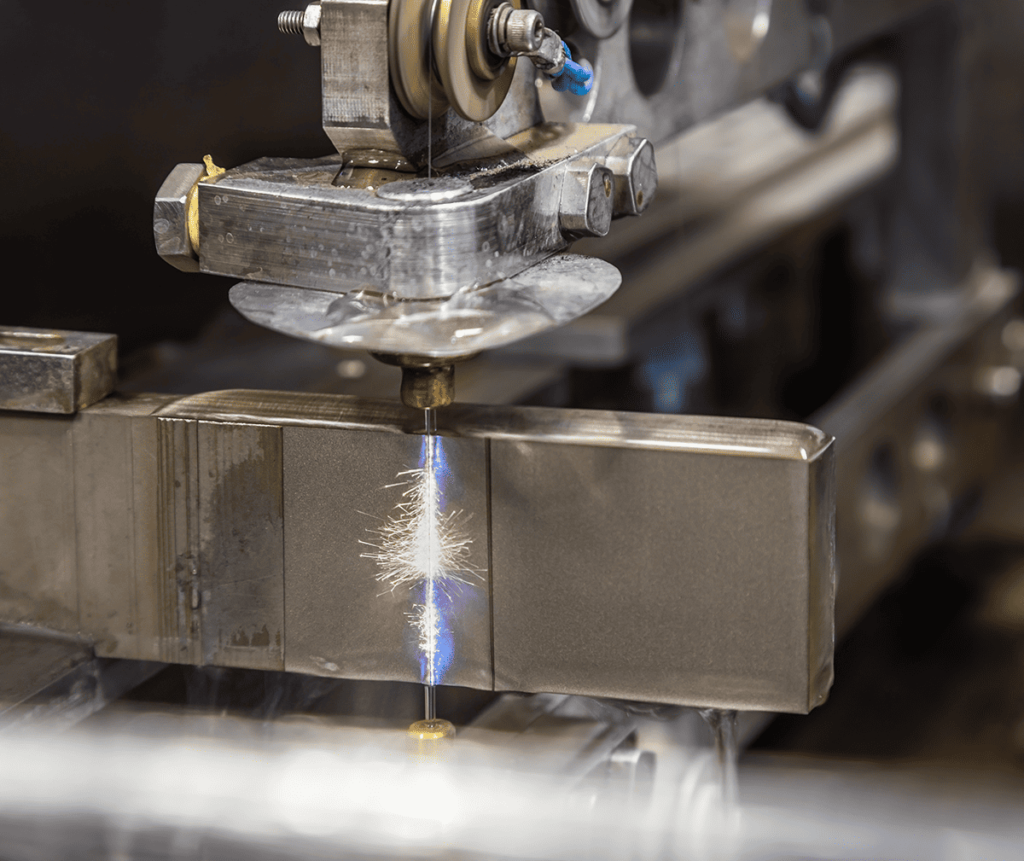
Wire Electrical Discharge Machining (EDM) is a technique for cutting titanium using a thin, electrically conductive wire. It is extremely precise and capable of maintaining tight tolerances, making it perfect for complex products.
Tips for Successful Cutting of Titanium
When cutting titanium, focusing on the following four key practices is essential for optimal results.
Select Appropriate Cutting Tools
Use titanium-specific tools, such as those made of carbide or high-speed steel coated with Titanium Aluminum Nitride (TiAlN). These materials can endure the high temperatures and stress involved with titanium cutting.
Optimize Cutting Parameters
Maintain moderate cutting speeds and high feed rates to reduce heat accumulation and work hardening. For roughing operations, a cutting speed of 60 m/min is suggested.
Ensure Adequate Cooling
Use high-pressure coolant to effectively disperse heat and allow chip evacuation. This method lowers the danger of tool wear and material damage.
Maintain Rigidity and Stability
Secure the workpiece tightly and use solid machine configurations to reduce vibrations, which can cause tool chatter and poor surface smoothness. Shorter cutting tools can also aid in reducing deflection.
FAQS
Is titanium difficult to cut?
Yes, titanium is often regarded tough to cut due to various intrinsic qualities and problems connected with the material. However, with the right machine tool and machining approach, titanium may be easily cut.
What material tools are best for cutting titanium?
Carbide-tipped tools are ideal for titanium cutting because of their hardness and heat resistance. Diamond-coated tools are very useful, particularly for precise cutting.
Can titanium be cut manually?
Manual cutting is possible, but it is time-consuming due to the hardness of titanium. Carbide-tipped blades and coolants can help boost efficiency.
Does cutting titanium affect its properties?
Cutting something wrong can cause work hardening and leftover stresses, which can weaken its mechanical qualities. Using the right cutting methods and settings helps keep the material’s purity.
Conclusion
To get good at cutting titanium, you need to know how it works and how to use the right tools. You can get around problems and make sure your titanium projects are of high quality by choosing the right tools, fine-tuning the cutting settings, and making sure they cool down properly.